
The Future of Personalized Nutrition in India: Why Dietitians Need More Than WhatsApp and Excel


The Future of Personalized Nutrition in India: Why Dietitians Need More Than WhatsApp and Excel
Introduction
Personalized nutrition is no longer a luxury reserved for elite athletes or specialized medical programs.
Today, individuals increasingly expect dietary recommendations tailored to their health conditions, lifestyle, food preferences, cultural habits, and personal goals. Whether someone is managing diabetes, navigating PCOS, improving gut health, preparing for pregnancy, or pursuing weight loss, generic diet charts are rapidly becoming outdated.
At the same time, nutrition professionals are facing a new challenge: delivering truly personalized care at scale.
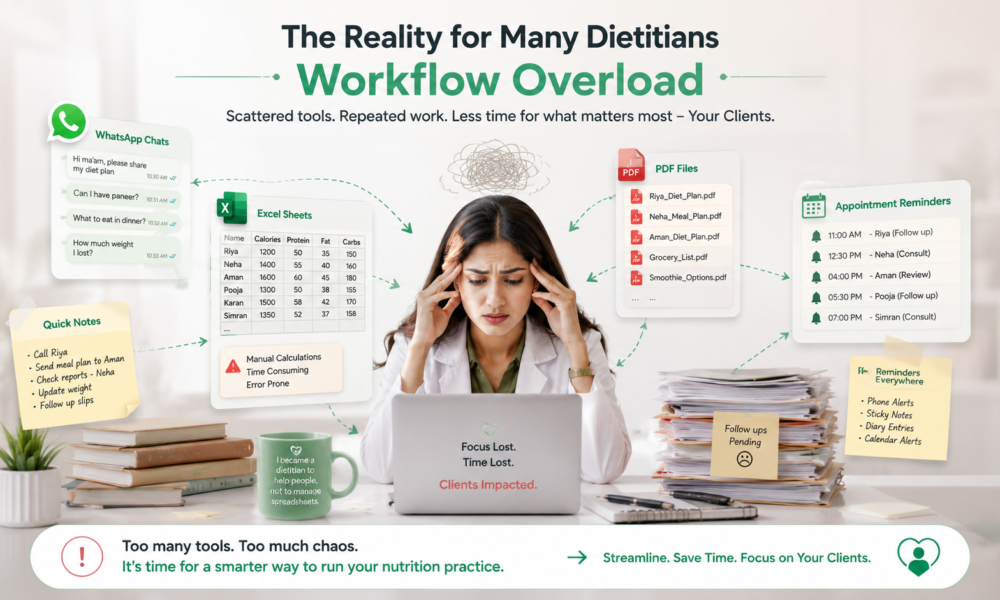
Many dietitians and nutritionists still rely on spreadsheets, WhatsApp messages, handwritten notes, PDFs, and manual calculations instead of dedicated nutrition practice management software. While these methods may work for a small number of clients, they often become difficult to sustain as practices grow.
The future of nutrition care is not just personalized—it is personalized, structured, data-driven, and technology-enabled.
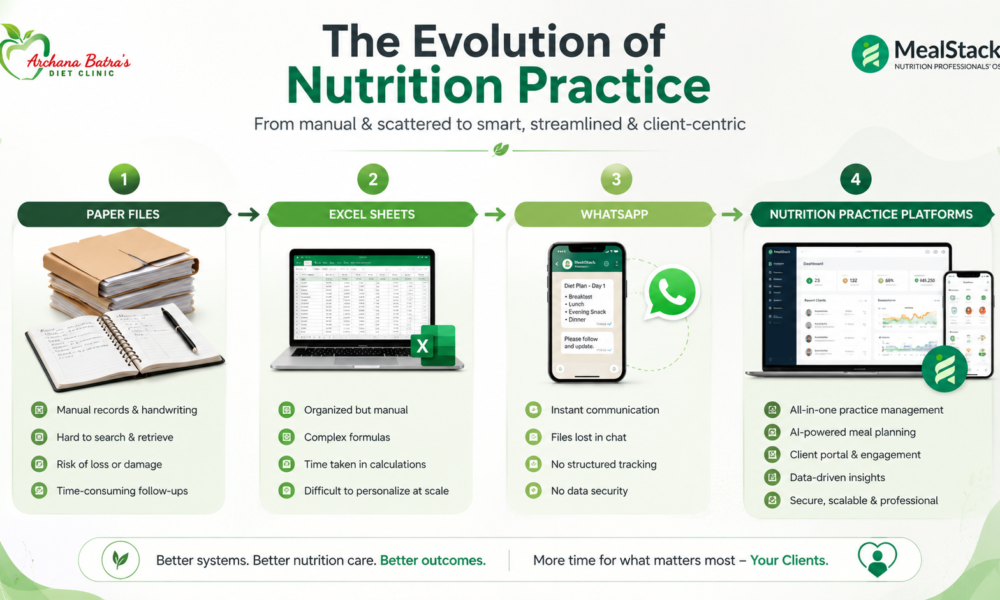
The Evolution of Nutrition Practice
The way dietitians deliver care has changed dramatically over the past two decades.
Phase 1: Paper-Based Practice
For many years, client information was maintained in physical files and notebooks. Diet plans were handwritten, follow-ups were tracked manually, and progress monitoring depended heavily on memory and paper records.
Phase 2: Spreadsheets and Messaging Apps
As digital tools became more accessible, practitioners shifted toward Excel sheets, Word documents, Google Drive folders, and WhatsApp communication.
These tools improved accessibility but created new challenges:
- Scattered client information
- Duplicate records
- Version control issues
- Time-consuming nutrient calculations
- Difficulty tracking progress over time
Phase 3: Integrated Nutrition Technology
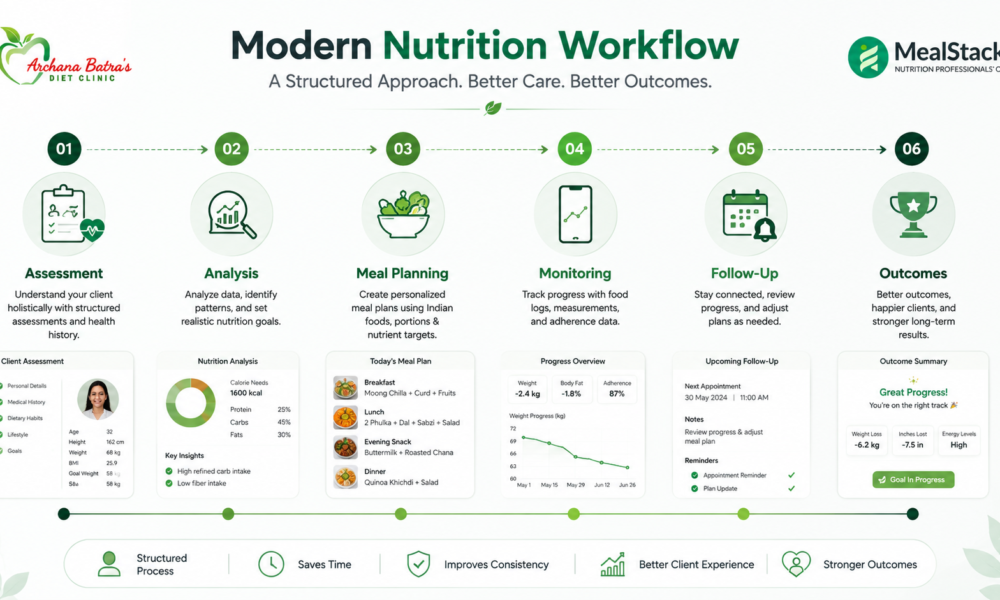
Today, nutrition professionals have access to specialized nutrition software that combines meal planning, client management, communication, documentation, scheduling, and analytics within a single ecosystem.
This shift allows practitioners to focus more on clinical decision-making and less on administrative work.
The evolution is not simply about adopting new software – it is about creating a more efficient, consistent, and client-centered nutrition practice.
Why Personalized Nutrition Is Difficult to Deliver at Scale
Personalized nutrition requires far more than creating a meal plan.
Every client brings unique variables:
- Medical history
- Food preferences
- Allergies and intolerances
- Cultural practices
- Budget constraints
- Lifestyle patterns
- Physical activity levels
- Behavioral challenges
- Health goals
Managing all of this information manually becomes increasingly complex as client volume grows.
1. Nutrient Analysis Takes Time
Accurate nutrition planning requires evaluating calories, macronutrients, micronutrients, fiber intake, meal distribution, and overall dietary quality.
Performing these calculations manually can consume significant consultation time and increase the risk of inconsistencies.
2. Indian Dietary Diversity Adds Complexity
India’s food culture is incredibly diverse.
A client in Punjab, Kerala, Gujarat, Tamil Nadu, Maharashtra, or West Bengal may consume entirely different foods, portions, cooking methods, and meal patterns.
Creating meaningful dietary recommendations requires understanding these regional variations while maintaining nutritional accuracy.
3. Follow-Up Management Is Often Inconsistent
Many clients struggle with adherence.
Without proper systems, it becomes difficult to monitor:
- Progress
- Compliance
- Weight changes
- Dietary logs
- Behavioral patterns
- Long-term outcomes
As a result, valuable opportunities for intervention and motivation may be missed.
4. Documentation Requirements Are Increasing
Clinical nutrition practice increasingly emphasizes structured documentation.
Frameworks such as SOAP Notes and ADIME documentation help improve continuity of care, communication, and clinical accountability.
However, maintaining these records manually can become cumbersome and time-intensive.
The Rise of Artificial Intelligence in Nutrition
Artificial Intelligence is rapidly transforming healthcare, and nutrition is no exception.
While AI cannot replace the expertise of a qualified dietitian, it can significantly enhance efficiency, consistency, and decision support.
Potential applications include:
Faster Meal Planning
AI meal planning tools can help generate meal suggestions aligned with calorie targets, dietary preferences, medical conditions, and nutritional requirements.
Nutrient Estimation
Technology can rapidly analyze food combinations and provide nutritional insights that would otherwise require extensive manual calculations.
Personalization Support
AI systems can identify patterns, trends, and opportunities that help practitioners make more informed recommendations.
Administrative Automation
Tasks such as scheduling, reminders, documentation support, meal plan organization, and client communication can increasingly be streamlined.
Better Client Engagement
Technology can help improve accountability through reminders, progress tracking, and structured follow-up systems.
The most successful future model is likely to be:
Dietitian Expertise + Technology Assistance
rather than technology replacing professional judgment.
How Modern Dietitians Are Building Digital Nutrition Practices
Across India, more nutrition professionals are adopting specialized nutrition practice management platforms to streamline operations and improve client outcomes.
These platforms combine:
- Meal planning software
- Dietitian client management tools
- Appointment scheduling
- Progress tracking
- Clinical documentation
- Nutrition analytics
- Client communication workflows
into a single ecosystem.
Modern nutrition software helps reduce administrative burden, improve consistency, and support better patient engagement.
As healthcare becomes increasingly digital, efficient workflows are becoming just as important as clinical expertise.
What Modern Nutrition Platforms Enable
Specialized nutrition platforms are helping practitioners deliver more organized, efficient, and personalized care.
Centralized Client Records
All client information remains accessible in a single location, reducing fragmentation and improving continuity of care.
Digital Meal Planning
Meal plans can be created, updated, customized, and shared more efficiently.
Comprehensive Food Databases
Access to extensive food composition databases improves nutrient accuracy and saves valuable consultation time.
Progress Tracking
Weight trends, measurements, dietary adherence, and health markers become easier to monitor over time.
Appointment Management
Scheduling, reminders, and follow-ups can be organized systematically.
Secure Client Communication
Structured communication channels reduce dependency on scattered conversations across multiple platforms.
Clinical Documentation
SOAP and ADIME workflows become easier to implement consistently and professionally.
Practice Scalability
Technology enables practitioners to serve more clients without compromising quality of care.
Why Indian Dietitians Need India-First Technology
Many nutrition platforms available today were originally developed for Western markets.
While these solutions may offer useful functionality, Indian practitioners often face unique requirements that generic systems may not adequately address.
Indian Food Databases Matter
Accurate nutrient information requires foods that people actually consume.
Regional dishes, traditional recipes, local ingredients, and culturally relevant meal patterns should be represented appropriately.
Indian Portion Sizes Matter
Clients think in terms of:
- Roti
- Katori
- Idli
- Dosa
- Glass
- Spoon
rather than exclusively in grams and ounces.
Technology should reflect how people eat and communicate in real life.
WhatsApp Remains a Core Communication Channel
For many Indian clients, WhatsApp continues to be the preferred medium for receiving information and communicating with healthcare professionals.
Solutions that integrate seamlessly with existing communication habits can improve engagement and adherence.
Business Requirements Differ
Indian practitioners often require:
- GST-compliant invoicing
- INR-based billing
- Localized workflows
- Regional dietary preferences
- Flexible consultation models
Several India-focused nutrition technology platforms have emerged to address these challenges. Platforms such as MealStack have been built specifically for Indian nutrition professionals and combine meal planning, client management, Indian food databases, SOAP and ADIME documentation, appointment scheduling, and WhatsApp-based workflows into a single system. MealStack’s unified IFCT, INDB, and USDA food database is one example of how localized technology can better support modern nutrition practices.
Choosing the Right Technology for Your Nutrition Practice
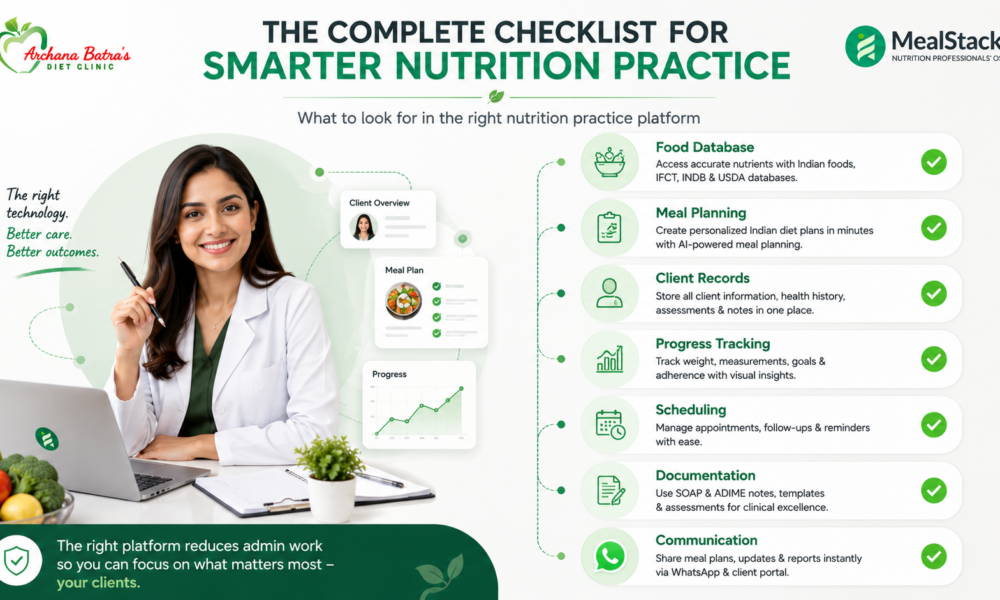
Before adopting any nutrition platform, practitioners should evaluate whether it supports their specific workflow requirements.
Consider the following questions:
- Does it support Indian foods and recipes?
- Does it provide accurate nutrient analysis?
- Does it simplify meal planning and personalization?
- Does it help organize client records efficiently?
- Does it support appointment scheduling and reminders?
- Does it enable meaningful progress tracking?
- Does it improve communication with clients?
- Does it support structured documentation?
- Can it scale as your practice grows?
- Does it genuinely reduce administrative workload?
Technology should ultimately save time, improve consistency, and enhance client outcomes rather than create additional complexity.
The Future of Personalized Nutrition
The future of nutrition care will likely become increasingly data-driven, connected, and individualized.
Emerging technologies are enabling practitioners to:
- Deliver more personalized recommendations
- Improve client engagement
- Track outcomes more effectively
- Monitor adherence more consistently
- Scale their services without sacrificing quality
At the same time, the human element remains irreplaceable.
Empathy, clinical expertise, behavior change coaching, cultural understanding, and professional judgment will continue to define successful nutrition practice.
Technology is not the destination.
It is the infrastructure that allows dietitians to focus on what matters most: helping people achieve sustainable health outcomes.
The practitioners who successfully combine evidence-based nutrition with efficient digital systems will be best positioned to meet the growing demand for personalized care.
Final Thoughts
Personalized nutrition is becoming the standard rather than the exception.
As client expectations continue to evolve, nutrition professionals need systems that support accuracy, efficiency, consistency, and long-term engagement.
The goal is not to replace the dietitian.
The goal is to reduce administrative friction, improve workflow efficiency, strengthen client relationships, and create more time for meaningful clinical interactions.
In a rapidly changing healthcare environment, the combination of professional expertise and thoughtfully designed technology may become one of the most powerful tools available to modern nutrition professionals.
Those who embrace this evolution will not only improve operational efficiency but also enhance the quality, scalability, and impact of the care they provide.

Understanding How Body Types Affect Weight Loss
One size does not fit all when it comes to weight loss. In large part, your body type determines how.
Read More
Top 10 Best Weight Loss Dietitians.
In 2025, losing weight involves more than just eating less. It is about eating properly, recognizing your body, and addressing.
Read More